
Want to make money when the market does nothing?
That’s exactly where the Short Straddle comes in — a simple yet powerful strategy used by experienced traders, especially in a range-bound market with low volatility. And in 2025, with the rise of automated trading, this strategy has become even more popular thanks to platforms like Tradetron.
What is a Short Straddle?
A Short Straddle is an options strategy where you sell a Call and a Put at the same strike price and expiry — usually At-The-Money (ATM).
Example
- Sell 1 ATM Call of Nifty (Strike 19800)
- Sell 1 ATM Put of Nifty (Strike 19800)
You earn a premium from both options. The idea is to profit if Nifty stays around 19800 till expiry.
When Should You Use a Short Straddle?
- The market is sideways or consolidating
- Implied Volatility (IV) is high and expected to drop
- There is no major news or event expected
- You want to benefit from time decay (Theta)
Ideal for: Thursdays (expiry), post-news events, tight range periods
Profit & Loss in Short Straddle
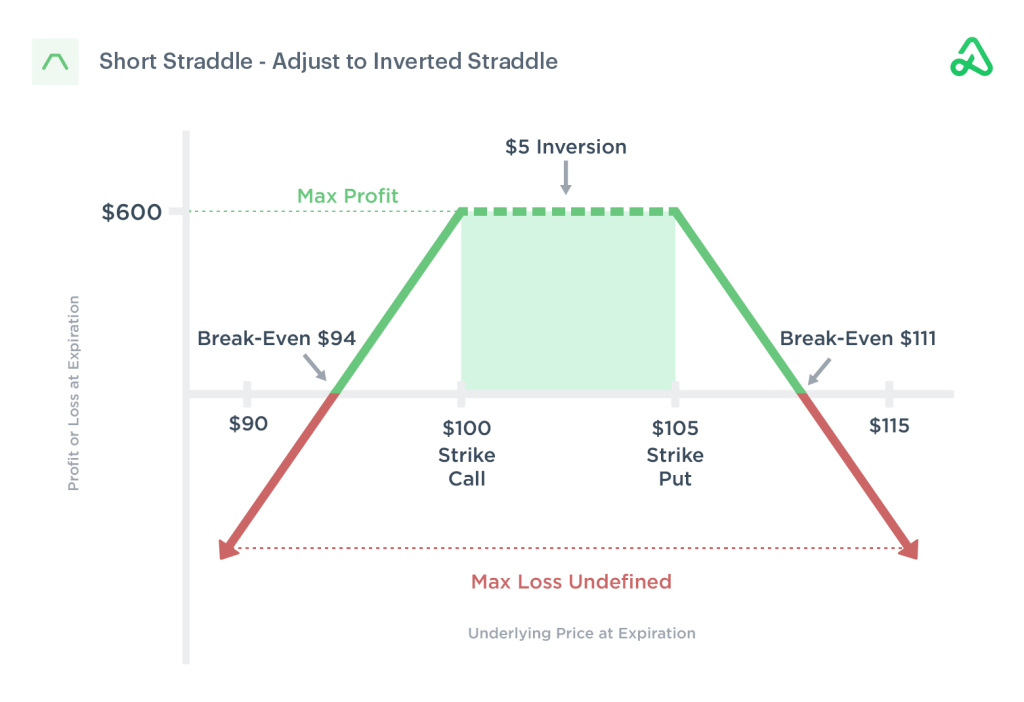
- Maximum Profit: When the market closes exactly at the strike price (both options expire worthless)
- Profit Range: Between Strike Price ± Total Premium
- Unlimited Loss: If the market moves sharply in either direction
That’s why most traders today use automated stop-loss and adjustments.
How to Automate Short Straddle with Tradetron
|
Feature |
Benefit |
|---|---|
|
Set Entry Conditions |
Deploy only when IV is high or price in range |
|
Add Stop-loss |
Exit position if loss exceeds a set % or point |
|
Re-entry Logic |
Re-sell at new strikes if SL hits |
|
Auto-adjust |
Create dynamic hedge or move to Iron Fly |
You can build your own strategy or use public ones already making profits.
Backtesting: A Must
Before you deploy real money, backtest your Short Straddle strategy on historical data.
- See past 6–12 months of strategy performance
- Analyze max drawdown, ROI, and P&L
- Adjust strike selection or SL based on insights
Risks in Short Straddle (and How to Manage)
|
Risk |
Solution |
|---|---|
|
Sharp Move in Market |
Add a hedge or define SL (e.g., ₹1000 max loss) |
|
Overnight Gaps |
Avoid holding naked Straddle overnight |
|
IV Crush / Expansion |
Trade only during high IV environments |
Pro Tip: Use delta-neutral straddle with tight SL for intraday.
Real World Use Case
Let’s say Nifty is at 19800 on a calm Tuesday, and IV is high due to Monday’s news.
- Sell 19800 CE for ₹100
- Sell 19800 PE for ₹120
Total Premium: ₹220
If Nifty closes anywhere between 19580 and 20020, you’re in profit!
Now automate this on Tradetron → deploy → sit back. No manual panic. Full control.
FAQs – Short Straddle
1. What is the ideal time to deploy a Short Straddle?
Mid-morning (10:30–11:00 AM), when market direction is clearer, and premiums are still decent.
2. Is Short Straddle safe?
Only if traded with proper SL and risk management. Without automation, it can lead to big losses.
3. What’s the difference between Straddle and Strangle?
In Straddle, you sell both options at the same strike price. In Strangle, they’re different strike prices (usually OTM).
4. Can I deploy a Short Straddle every Thursday?
Yes, many traders do it for weekly expiry. But always check IV and news flow before deploying.
5. How can I automate a Short Straddle on Tradetron?
Choose “Create Strategy” > Add Entry Logic > Sell ATM CE + PE > Add Stop-loss & Exit Rules > Deploy > Done.